When Is It Worth Developing Custom Software for Your Business?
Not every business needs its own software. However, when operations rely on spreadsheets, manual tasks or disconnected applications, custom software can reduce errors, improve productivity and support business growth.
By serginho 8 min read Updated November 8, 2026

In this article
- What is custom business management software?
- When spreadsheets begin to limit business operations
- When business applications are not integrated
- When the business has processes that standard software cannot accommodate
- When business growth requires greater operational control
- How much does custom software development cost?
- When is off-the-shelf software a better option?
- How to determine whether your business needs custom software
Many businesses begin by organising their operations with Excel spreadsheets, accounting software, sales applications and tools designed to address specific needs. During the early stages of a business, this combination is often sufficient to manage customers, record sales and coordinate activities without making substantial investments in technology.
However, as the volume of operations increases, new requirements emerge. Information becomes scattered across different platforms, employees need to repeat tasks and certain procedures depend on manual checks that consume valuable time.
In this situation, developing custom software can become a practical way to improve business management. However, replacing existing tools or building an entirely new application is not always necessary.
The decision should begin with an assessment of the company's processes, the difficulties it faces and the results it wants to achieve.
What is custom business management software?
Custom business management software is an application developed to meet the operational requirements of a particular organisation. Unlike off-the-shelf software, which provides features designed for a broad range of businesses, a custom solution incorporates specific business rules, procedures and integrations.
For example, a distribution company may need to manage orders according to product availability across different warehouses, individual customer agreements and delivery routes. A technical services company might require a system connecting customer requests, quotations, staff assignments and job tracking.
Although commercial applications exist for these activities, they do not always accommodate every operational requirement.
Custom development allows a business to define which information is recorded, how it moves between departments, which approvals are required and what conditions govern each process.
Its main value is not simply owning exclusive software, but having a tool that supports the way the organisation actually operates.
When spreadsheets begin to limit business operations
Excel and other spreadsheet applications are useful for organising information, performing calculations and preparing reports. Their flexibility allows businesses to address many requirements without investing in additional software development.
Problems arise when spreadsheets become the company's primary operational system and several employees depend on them to complete their daily work.
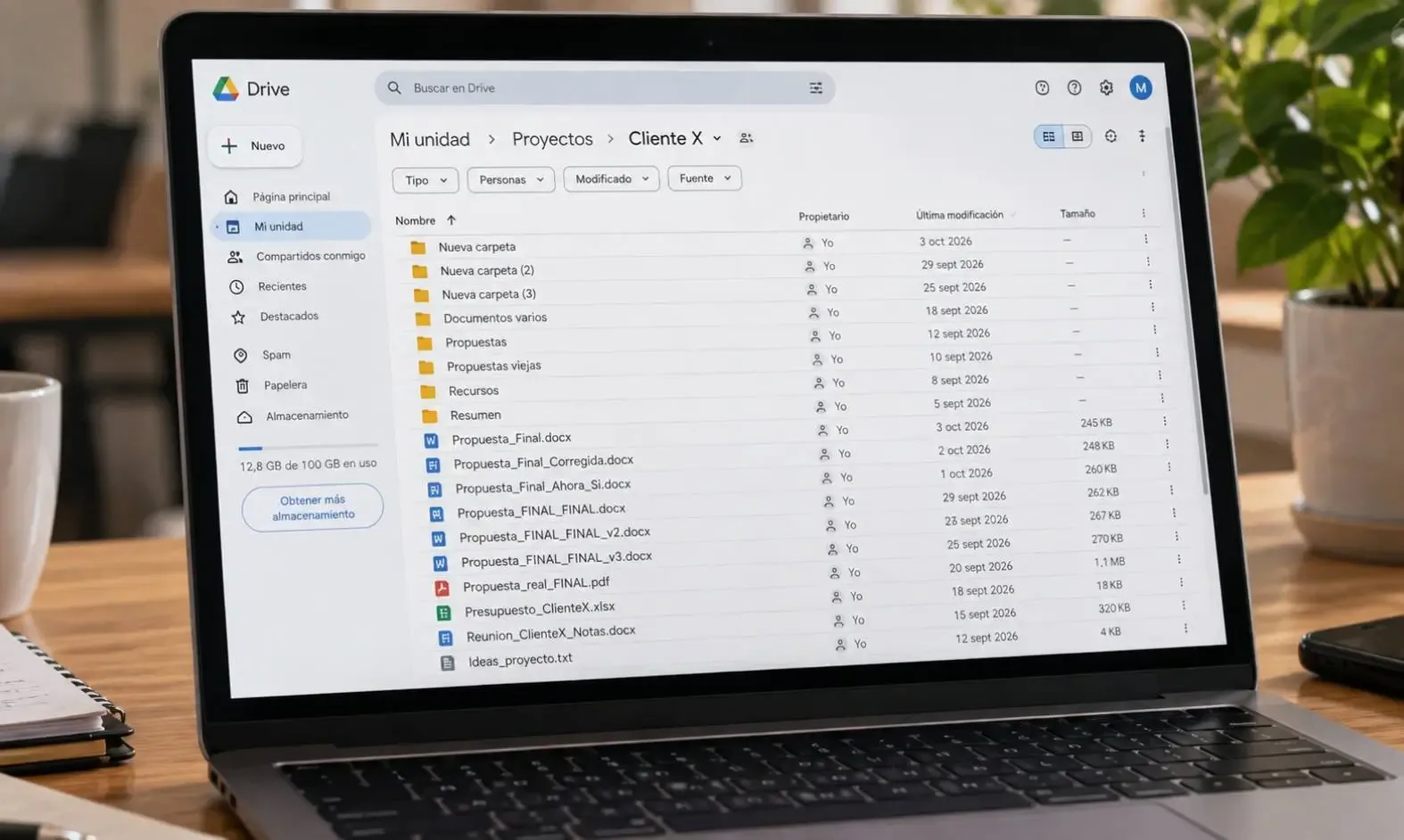
Consider a small or medium-sized business that uses separate files to manage customers, quotations, orders and payments. The sales team updates one spreadsheet, the administrative department maintains another and the operations team uses a third document to track deliveries.
While the workload remains manageable, this approach may work reasonably well. However, as customer numbers and transactions increase, duplicate records, inconsistencies between files and uncertainty about which information is current become more common.
A centralised system allows departments to work with shared records, document each transaction and access updated information without manually consolidating multiple files.
Nevertheless, not every spreadsheet needs to become a software application. In some cases, improving its structure, introducing a simple database or adopting an existing commercial tool can solve the problem at a lower cost.
When business applications are not integrated
Many small and medium-sized enterprises use different applications to manage their activities. The sales department works with a CRM, finance uses accounting or invoicing software, and operations organises its tasks through another platform.
Each application may work perfectly well on its own. However, when these systems cannot exchange information, employees must transfer data manually.
For example, when a customer approves a quotation, an employee may need to enter the customer's details again to create a work order. Once the service is completed, the finance department must retrieve that information to issue the corresponding invoice.
These activities consume time and increase the likelihood of errors, particularly when a business manages a large number of customers or orders.
Before developing a new system, it is worth examining whether existing applications support integrations through APIs, connectors or other data exchange mechanisms.
Sometimes, connecting current applications is enough to automate the flow of information. In other situations, developing an application that centralises particular operations while communicating with existing systems may be necessary.
Integration should be considered as an alternative to complete replacement, especially when current tools already perform their intended functions effectively.
When the business has processes that standard software cannot accommodate
One of the strongest reasons to develop custom software arises when a company needs to apply specific operational rules.
Consider a maintenance services provider that works with customers under different contracts. Some agreements include a fixed number of monthly visits, others establish special billing conditions, and certain services require approval before work can begin.
If the existing software cannot accommodate these conditions, employees must perform manual checks or maintain additional records.
A custom application can incorporate contractual terms, validate requests, manage approvals and document completed services.
Similar situations arise in businesses that calculate sales commissions using multiple variables, manage complex approval procedures or deliver services involving several operational stages.
In these cases, custom development makes it possible to incorporate business rules directly into the system, reducing dependence on manual verification.
However, procedures should be documented before development begins. If a company has poorly defined processes, creating new software may simply transfer existing operational problems into a different platform.
When business growth requires greater operational control
As a small or medium-sized business grows, the amount of information it needs to manage usually increases. Growth may also involve additional employees, new branches, more sales channels or an expanded range of services.
Under these conditions, managers need to understand which activities are pending, where delays are occurring and how work is distributed across departments.
When information is scattered, preparing a management report may require hours of collecting and checking data.
A business management system can simplify operational monitoring, establish access permissions according to user roles and generate performance indicators from existing records.
For example, a company operating several branches may need to review outstanding orders at each location, identify differences in service times and analyse operational performance across the business.
However, adding a dashboard does not automatically improve management. The organisation must first establish which information matters, how performance will be measured and what decisions will be made using those indicators.
For some projects, a business intelligence tool connected to existing applications may be sufficient.
How much does custom software development cost?
The cost of custom software depends primarily on the project's complexity, the number of features required and the integrations involved.
A simple application for recording requests and tracking their status requires a different level of investment from a platform that includes customer management, quotations, permissions, automation, reporting and connections to external systems.
Other factors include data migration, security requirements, the number of users and the testing required before deployment.
Businesses should also agree on the project scope, payment terms, delivery milestones and how additional requirements will be handled. Establishing these conditions early helps prevent misunderstandings during projects that may extend over several months.
The investment does not end when the software is delivered. Hosting, backups, maintenance, updates and technical support should also be included in the total cost of ownership.
One way to manage the budget is to begin with an initial version that addresses the most important operational requirements. Once employees start using the application, the business can assess additional features and expand the system progressively.
When is off-the-shelf software a better option?
Developing a custom application is not always the most appropriate decision.
If a company needs to manage sales contacts, issue invoices, operate a conventional online store or maintain standard accounting records, established commercial solutions may meet those requirements with faster implementation and lower initial costs.
This is particularly important for processes subject to tax and regulatory requirements.
For example, developing electronic invoicing functionality from scratch may require compliance with local tax authority requirements, integration with authorised services and ongoing updates when regulations change.
A business may need a custom application to manage its commercial operations while continuing to use its existing accounting or invoicing platform.
In this situation, integrating the two applications may be more practical than rebuilding functionality that is already available.
The decision should consider total cost, integration capabilities, dependence on the software provider and the ability to accommodate the company's operational requirements.
How to determine whether your business needs custom software
Before commissioning software development, it is important to identify which difficulties genuinely affect daily operations.
If employees repeatedly enter the same information, errors frequently occur between departments or certain procedures require extensive manual checking, technology may offer opportunities to improve efficiency.
The next step is to assess whether these difficulties can be resolved by configuring existing applications more effectively, introducing automation or connecting the systems already in use.
When these alternatives are insufficient, custom development may provide a solution that better matches the company's requirements.
It is also important to consider who will administer the application, how employees will be trained and what maintenance will be necessary as business processes evolve.
At DodoLab, we develop business systems and digital solutions based on each organisation's requirements. An initial assessment helps identify the necessary features, evaluate integration opportunities and establish a phased implementation approach.
Custom software can be a worthwhile investment when it solves specific operational problems, reduces repetitive tasks and provides more reliable information.
The decision should not depend on how many features an application can include, but on the results the business needs to achieve and its ability to maintain the solution over time.
Frequently asked questions
1. What is the difference between custom software and off-the-shelf software?
Off-the-shelf software provides features designed to address common requirements across different businesses. Custom software is developed around an organisation's specific processes, rules and integration needs. The best option depends on operational complexity, available solutions and long-term costs.
2. Do I need to replace my existing systems to introduce custom software?
No. A custom application can integrate with existing ERP systems, CRMs, invoicing platforms and other business tools, provided they support the necessary technical connections. This approach can reduce costs and make implementation easier.
3. How long does it take to develop custom business management software?
Development time depends on the project's scope and integration requirements. An application with limited functionality may take several weeks, while a platform involving multiple modules may require several months. An initial requirements assessment provides a more reliable basis for estimating delivery times.
Was this article helpful?
Get an assessment